

Allan’s Beach, Otago Peninsula
2025/26 year
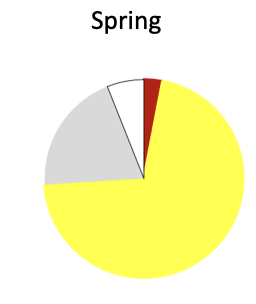
In this year’s spring sample, cockabullies (Triplefins, yellow) were important again similar to last year. Some Sprat (red) was recorded, but it was Bullies (light grey) that were present >10% RRA for the first time: Graham’s gudgeon has been recorded in the diet of Otago kororā before, so this was not surprising. Tarakihi and Red Moki (orange, not visible in pie chart) also occurred, while “other” prey (white) were Whitebait (two species of Galaxiids), Blue moki and Thornfish. Non-fish prey were Jellyfish, Krill, Southern Arrow squid and Club pigmy octopus, but none were important.
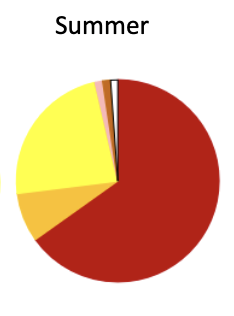
In the summer sample, Sardines (Slender and Stout sprat - red), Tarakihi and Red moki (dark yellow) and Cockbullies (Triplefins, bright yellow) were important prey. Morey eels (brown) and Bluenose warehou (dark pink) were present but not important. “Other” prey (white) was Ahuru and no non-fish prey was recorded.
2024/25 year
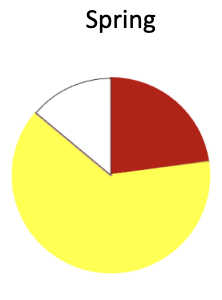
The only previous diet study of kororā was in Otago examining hard parts from stomach contents and casts (regurgitates). Sprat was over 50% of the diet. In the spring sample, the sample contained Sprat (red) (Slender sprat and Stout sprat). They are in the same family as Pilchards but occur in cooler waters. Triplefins (cockabullies) were very important prey (Yellowblack triplefin, Common triplefin, Estuarine triplefin, Yellowtail triplefin, and Topknot (yellow)). The other species (white) were Whitebait (3 species), Blackhead lanternfish, Tarakihi, Thornfish, Hoki, bristlemouth fishes (genus only), Banded Wrasse, Greenbone. Non-fish prey were Club pigmy octopus and krill.
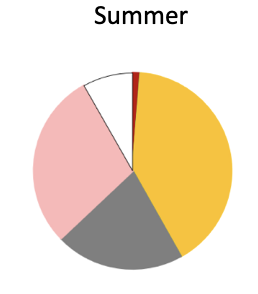
In the summer sample, Slender sprat (red) was still present, and Tarakihi (orange), Barracouta (grey), and warehous (pink) (Bluenose warehou, Blue warehou and Ruffe) were important. Triplefins (yellow) were also present but not important. The “other” species (white) were Hector’s lanternfish, Morid cods (ahuru, Red cod, Southern bastard cod), Hoki, Silver dory, Seahorse, Seaperches (extralimital to the north Pacific), Red gurnard, Perches (Butterly perch, Sunrise perch), Red baitfish, Speckled stargazer, Witch, and Leatherjacket. Non-fish prey were salps, Southern arrow squid and krill.
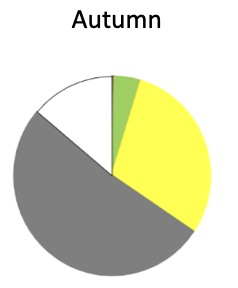
In the autumn sample, Lanternfishes (green) appeared, and so did Triplefins (yellow) (Yellowblack triplefin, Estuarine triplefin, Yellowtail triplefin) and Barracouta (grey) were the most important prey. Slender sprat (red) was recorded in very low sequence numbers. The “other” species (white) were, Sandfish, Piper, Seahorse, Jack mackerel (identified to genus only), Redbait, Tarakihi, Smooth pipefish, and Yelloweye mullet. Non-fish prey were Krill and Southern arrow squid.
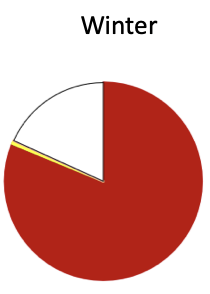
In the winter sample, Slender and Stout sprat (red) were the most important prey, and Anchovies were also recorded, a warmer water species not previously recorded here. Triplefins (yellow) (Estuarine and Deepwater triplefins) were also found, and Lanternfishes (but unimportant), Blue warehou (pink, but unimportant). “Other” species (white) were Speckled moray, Common smelt, Inanga, ahuru, Piper, Pipefishes (only to genus), Red gurnard, Dark toadfish, Thornfish, and Graham’s gudgeon. Non-fish prey was Southern arrow squid and Club pygmy octopus.